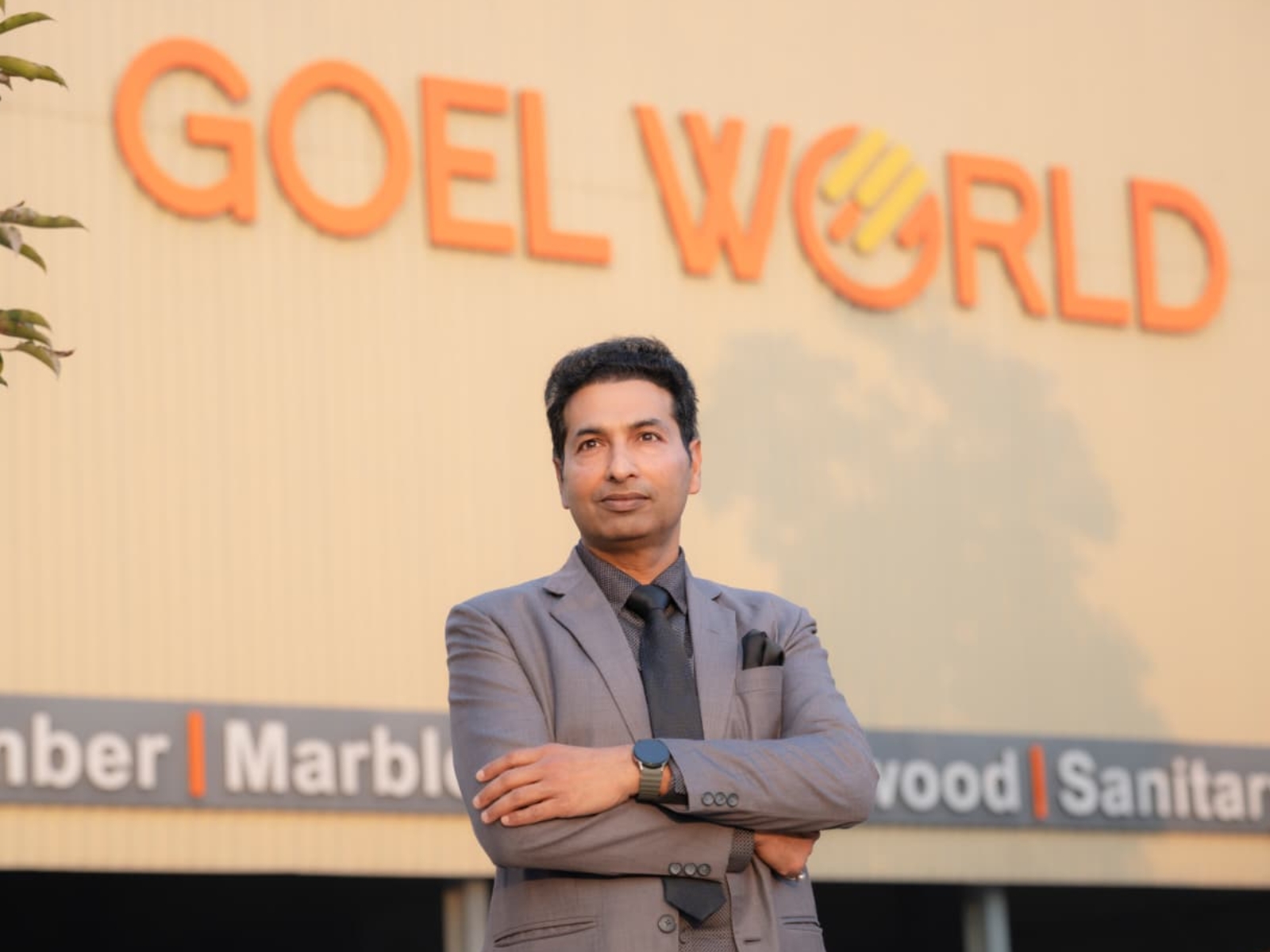
Goel World Brings Integrated Home-Building Model to Lucknow, Backed by Century-Old Legacy
Mar 25, 2026
PNN
Lucknow (Uttar Pradesh) [India], March 25: Lucknow's home construction ecosystem is undergoing a structural shift as buyers move away from fragmented sourcing toward integrated, experience-led solutions. The change comes amid rising demand for consistency in quality, pricing transparency, and design cohesion across the city's expanding residential corridors.
For years, homebuilding in Lucknow has unfolded through a fragmented network of local markets, where homeowners sourced timber, granite, stones, and Indian marble, as well as imported or Italian marble, often in separate transactions across the city. The process typically involved multiple rounds of coordination, from procuring plywood from commonly available brands like Greenply, Austin Ply, and Tplus, to selecting laminates from Merino, Stylam, and GreenLam, alongside choosing tiles from manufacturers such as Somany, Simpolo, RAK, and Johnson, and sanitary ware from Jaquar and Artize.
Sector observers note that this dispersed procurement pattern, despite being the norm for years, has frequently resulted in uneven finishes, scheduling delays, and diffused accountability, particularly when multiple vendors are involved in a single project.
A more consolidated model is now emerging in the city. Among the players driving this shift is Goel World, an integrated experience center led by Sarvesh Goel, Chairman of Mansingh Goel Group, whose family has a 100-year legacy in the timber and building materials trade.
The facility brings together a wide spectrum of products and services under one roof, including modular interior solutions such as kitchens, wardrobes, and vanity units, along with finishing elements like wooden flooring by Lamiwood, blinds, carpets, and wallpapers. The approach is aimed at reducing the need for multiple sourcing points while enabling coordinated design outcomes.
Speaking on the limitations of digital-first selection, Goel said that material choices often appear different in real conditions compared to catalog images. He emphasized that physical interaction with products, including surface textures and functional performance, allows buyers to make more informed decisions.
The shift also aligns with changing consumer preferences in emerging residential zones such as Gomti Nagar Extension and Shaheed Path, where buyers are increasingly prioritizing integrated design over piecemeal construction. Full-height wardrobes, coordinated laminate finishes, and durable material combinations are gaining traction, reflecting a move toward long-term usability and visual uniformity.
Experts note that while demand for high-quality construction materials has grown alongside Lucknow's urban expansion, the supply chain has remained largely unorganized. Integrated hubs are attempting to address this gap by offering verified products, standardized pricing, and end-to-end solutions.
Goel stated that scale plays a key role in pricing efficiency. By aggregating demand across categories such as timber, marble, tiles, plywood, laminates, and sanitary ware, the model enables stronger sourcing leverage with manufacturers, making quality materials accessible across different budget segments.
Industry stakeholders believe that such developments could position Lucknow as a regional center for design-led construction practices. As integrated formats gain traction, the city's home-building process is expected to become more structured, transparent, and experience-driven.
The transition marks a departure from traditional procurement methods and signals a broader shift in how urban homeowners approach construction in tier-two cities.
(ADVERTORIAL DISCLAIMER: The above press release has been provided by PNN. ANI will not be responsible in any way for the content of the same.)