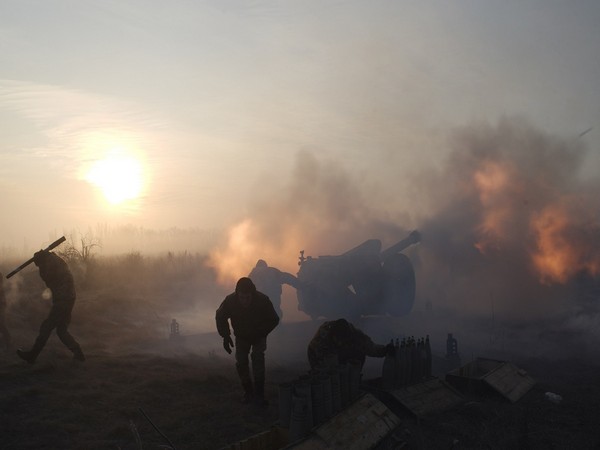
'Burning crater of war' growing in the Middle East
Oct 15, 2024
New York [US], October 15: CNN reported that the situation in the Middle East became more tense after 4 Israeli soldiers were killed and more than 60 people were injured in a Hezbollah drone attack on a military facility in northern Israel.
Tensions escalate
The incident occurred on the evening of October 13 and became one of the deadliest attacks on Israel since late October 2023. All four people killed were infantry soldiers who were training at the facility. On the same day, October 13, Hezbollah announced that it had launched a series of UAVs at an infantry training camp in northern Israel. Previously, Israel announced that it had intercepted a Hezbollah UAV but did not disclose the location of the interception.
Regional tensions are showing signs of rising after the US announced the deployment of the Terminal High Altitude Area Defense (THAAD) missile defense system to Israel along with about 100 soldiers to operate the system. Washington's new move is to be ready to support Tel Aviv if Iran attacks Israel again like it did recently.
Meanwhile, the possibility of Israel retaliating against Iran on October 1 is causing many concerns for Tehran. CNN quoted a source from Tehran saying that the country has sent a message to Washington that it will attack again if Israel attacks Iran. General Amir Ali Hajizadeh, commander of the air defense and air force of the Islamic Revolutionary Guard Corps (IRGC), said on October 13: "We are ready to respond to any wrong move by Israel." Earlier, The Times of Israel quoted an Iranian diplomatic official warning Gulf countries not to lend their airspace to Tel Aviv to conduct military operations against Tehran. The official also emphasized that if they lend their airspace to Israel, countries will have to suffer a chain reaction. The statement was made when Iranian Foreign Minister Abbas Araghchi visited Saudi Arabia and several countries in the region to negotiate on the issue. Qatar, Kuwait, Bahrain, and the UAE all have military facilities or a US military presence.
However, Washington's deployment of THAAD and troops to Israel suggests that Tel Aviv is likely to attack Tehran. According to diplomats, although the US agrees with Tel Aviv's response to Tehran, it does not want Israel to attack Iran's oil or nuclear facilities because of concerns about the consequences. Recently, Israeli Defense Minister Yoav Gallant also emphasized that when the country attacks Iran, it will be a "deadly, precise and unexpected" attack.
In terms of overall economic impact, the threat of an Israeli attack on Iran has caused oil prices to rise recently and led to no small amount of concern.
Calculation of the parties
Responding to Thanh Nien yesterday (October 14), US defense intelligence expert Carl O. Schuster assessed: "The parties do not seem to have changed their tactics and actions. Tehran knows that if it pushes Tel Aviv too far, Iran could lose its oil export facilities on Kharq Island, and even important nuclear facilities. Tehran fears a possible reaction from Tel Aviv to Iran's attack on Israel on October 1. Therefore, Tehran has shifted its focus to diplomatic and propaganda efforts to restrain Tel Aviv, hoping that those in the US administration who are still friendly with Iran will use their influence to influence Israel. In addition, Iran is trying to convince regional rivals such as Saudi Arabia to prevent Israel from being allowed to use the airspace of neighboring countries."
Former Grand Marshal Schuster added: "For its part, Israel will continue to work to destroy the military leadership and command of Hezbollah in Lebanon. Meanwhile, the Houthis in Yemen appear to be limiting their direct operations against Israel. Thus, the Houthis acknowledge that Tel Aviv, unlike the West, will be able to retaliate severely against the Houthis' most important facilities such as ports, military headquarters and supply areas. That is something the West has avoided doing in the past."
"The current state of the conflict will continue until December. But perhaps after the US presidential election, the situation may change, as all sides wait to see who will be the new owner of the White House to come up with the next action plan," the military intelligence expert predicted.
Source: Thanh Nien Newspaper