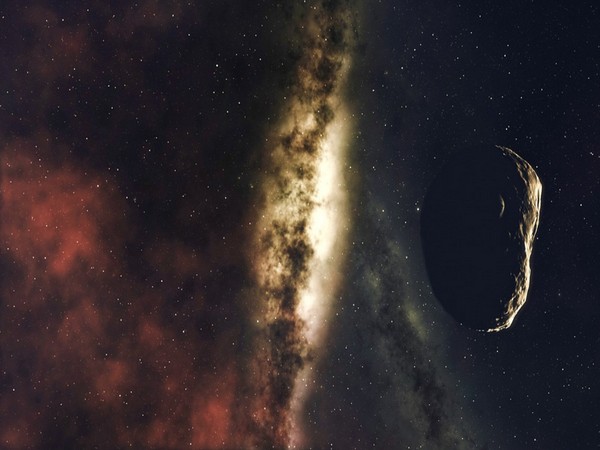
4 asteroids to pass Earth on October 25, including 'urban killer'
Oct 25, 2024
New York [US], October 25: The US National Aeronautics and Space Administration (NASA) announced that several asteroids will pass by Earth on October 25, among four asteroids entering Earth's orbit in less than 12 hours.
Named 2002 NV16, the asteroid will reach a position only about 4.5 million km from Earth at 10:47 p.m. on October 25 (Vietnam time), according to Live Science .
This is the largest member of the "four" group preparing to visit the earth, with a diameter of about 177 km.
Closely followed by asteroid 2024 TR6, 46 m in diameter, passing about 5.6 million km from Earth at 22:51
The remaining two asteroids, 2015 HM1 and 2024 TP17, also arrived at Earth in less than 12 hours compared to 2002 NV16 and 2024 TR6, with distances within 5.5 million km and 4.6 million km, respectively.
These distances may seem quite far by Earth standards. However, all four objects are on the list of potential threats to our planet, traveling within 480 million kilometers of Earth.
Of these, 2002 NV16 is large enough that when it hits Earth, it can wipe out a large city on the surface of the planet and trigger a ripple effect across the planet. Therefore, it is considered an " urban killer ".
In fact, astronomers have raised alarms about the number of asteroids that have been detected just before they passed by Earth.
Each year, the Catalina Sky Survey discovers about 2,000 new near-Earth asteroids, which NASA defines as those larger than 460 feet (140 meters) and come within 4.5 million miles (7.4 million kilometers) of Earth.
Source: Thanh Nien Newspaper